
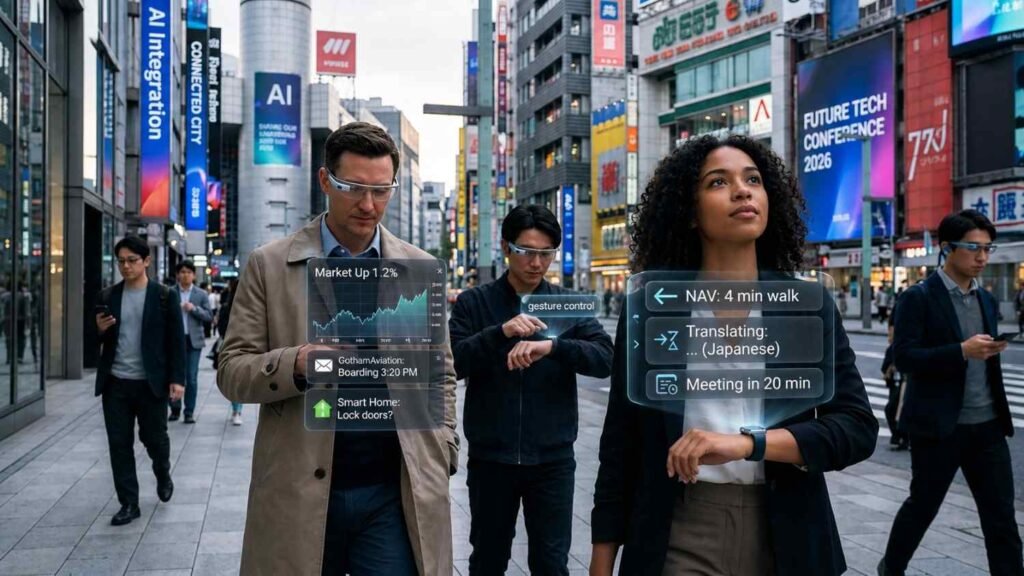
I recently explored AI wearable displays, and honestly, the experience completely changed how I interact with technology. Instead of constantly checking my phone, I used smart glasses that projected notifications right in front of my eyes. This hands-free interaction felt natural, fast, and surprisingly addictive. Moreover, I noticed how seamlessly these devices integrated into my daily routine. From navigation to instant translations, everything became smoother. As a result, I started relying less on my smartphone and more on wearable AI technology.
In 2026, AI wearable displays are no longer futuristic concepts; they are becoming mainstream innovations. These devices combine augmented reality, artificial intelligence, and real-time data processing. Consequently, they deliver faster, smarter, and more immersive user experiences. Unlike smartphones, wearable displays focus on convenience and continuous interaction. Furthermore, companies are heavily investing in this shift toward wearable computing. Therefore, 2026 is shaping up to be the breakthrough year for AI-powered wearable displays.
AI wearable displays are replacing smartphones faster than expected in 2026
- Smart glasses reduce screen dependency
- AI assistants provide instant responses
- Hands-free usage improves productivity
- Real-time notifications appear in your field of vision
- Wearables eliminate constant phone checking
AI wearable displays enhance productivity through real-time assistance and automation
- Voice commands replace manual typing
- AI suggests actions instantly
- Calendar and reminders sync automatically
- Real-time translations boost communication
- Navigation becomes effortless with AR overlays
Augmented reality integration in AI wearable displays transforms daily interactions
- AR overlays provide contextual information
- Users access directions without maps
- Shopping becomes interactive with virtual previews
- Education improves through immersive visuals
- Workflows become more engaging and efficient
AI-powered wearable displays improve health tracking and personal well-being
- Continuous health monitoring in real time
- Smart alerts for irregular activity
- Fitness tracking becomes more accurate
- Sleep analysis improves daily routines
- AI suggests personalized health tips
Fashion and comfort innovations make AI wearable displays more user-friendly
- Lightweight designs increase comfort
- Stylish frames match modern fashion trends
- Battery life continues to improve
- Devices become less intrusive
- Customization options attract more users
Privacy and security advancements in AI wearable displays build user trust
- Advanced encryption protects user data
- Facial recognition enhances security
- AI detects suspicious activities instantly
- Users control data permissions easily
- Companies prioritize transparency in data usage
Major tech companies drive innovation in AI wearable display technology
- Tech giants invest heavily in wearable AI
- Startups introduce creative solutions
- Competition accelerates innovation
- New features launch frequently
- Market adoption grows rapidly
AI wearable displays create new opportunities in business and remote work
- Virtual meetings become immersive
- Remote collaboration improves efficiency
- Hands-free workflows save time
- Field workers access real-time data
- Businesses adopt wearable tech for productivity
Gaming and entertainment industries evolve with AI wearable display experiences
- Immersive AR gaming becomes popular
- Real-time interaction enhances gameplay
- Streaming integrates with wearable screens
- Virtual experiences feel more realistic
- Entertainment becomes more personalized
AI wearable displays reduce digital distraction and improve focus
- Minimal interface reduces overload
- Notifications become context-aware
- Users stay present in real life
- Multitasking becomes more efficient
- Focus improves with less screen switching
Battery efficiency and hardware improvements accelerate wearable adoption in 2026
- Longer battery life supports all-day use
- Efficient chips reduce power consumption
- Faster processing improves performance
- Compact hardware enhances portability
- Charging technology becomes more advanced
AI wearable displays redefine communication through smart interactions
- Instant translation breaks language barriers
- Voice-first communication becomes standard
- Visual cues enhance conversations
- AI predicts user responses
- Communication becomes faster and smarter
The future of AI wearable displays points toward a smartphone-free lifestyle
- Devices replace traditional smartphones
- AI becomes a personal assistant
- Digital experiences become seamless
- Technology blends into daily life
- Users gain more freedom and flexibility
Conclusion
AI wearable displays are rapidly transforming how people interact with technology in 2026. These devices offer convenience, speed, and smarter functionality compared to traditional smartphones. Moreover, they enhance productivity, health tracking, and communication while reducing distractions. As innovation continues, wearable AI technology will likely dominate the digital landscape. Therefore, users should prepare for a future where smartphones become secondary devices. Ultimately, AI wearable displays are not just a trend but a major technological evolution shaping everyday life.
FAQs
1. What are AI wearable displays?
AI wearable displays are smart devices like glasses or headsets that use artificial intelligence to show information in real time.
2. Will AI wearable displays replace smartphones?
Yes, gradually. They offer hands-free and faster interaction, reducing reliance on smartphones.
3. Are AI wearable displays safe to use?
Yes, most devices include strong privacy and security features to protect user data.
4. What are the benefits of AI wearable displays?
They improve productivity, health tracking, communication, and provide immersive experiences.
5. Are AI wearable devices expensive?
Currently, some are costly, but prices are expected to decrease as adoption increases.