
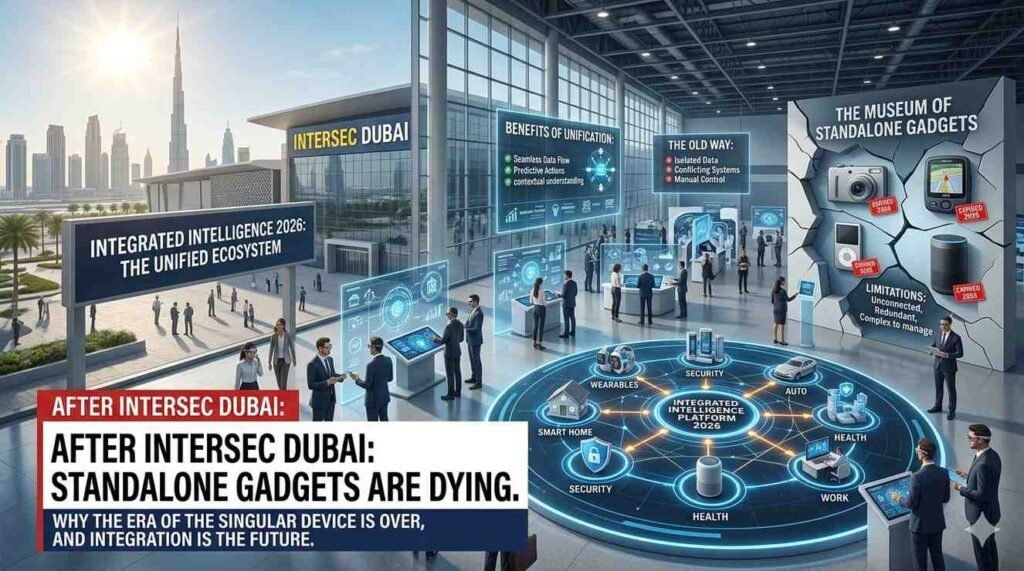
When I recently explored the innovations showcased after Intersec Dubai, I personally tested several smart systems that completely changed how I view technology. I used integrated security dashboards, AI-powered surveillance, and connected smart home devices, and honestly, the experience felt seamless compared to traditional standalone gadgets. Instead of juggling multiple apps and devices, everything worked together in one ecosystem. This shift clearly highlights how integrated intelligence 2026 is reshaping user expectations. Moreover, I noticed that efficiency, speed, and automation improved significantly when devices communicated with each other in real time.
In addition, while using these advanced systems, I realized how outdated standalone gadgets now feel. Previously, I relied on separate cameras, alarms, and smart assistants, but they lacked coordination. However, integrated intelligence solutions combine AI, IoT, and cloud computing into a unified system. As a result, users gain better control, predictive insights, and improved security. Therefore, it is evident that after Intersec Dubai, the future of technology is no longer about individual devices but about intelligent ecosystems that work together effortlessly.
What Is Integrated Intelligence 2026 and How It Works in Smart Ecosystems?
Integrated Intelligence 2026 refers to the combination of AI, IoT, cloud computing, and data analytics into a single, interconnected system. Instead of operating independently, devices now share data and respond intelligently.
For example:
- Smart cameras detect unusual activity and instantly notify security systems
- AI assistants control lighting, temperature, and appliances automatically
- Cloud platforms store and analyze real-time data for predictive actions
Consequently, this interconnected approach enhances efficiency and reduces manual effort. Moreover, businesses and homeowners both benefit from centralized control and automation.
Why Are Standalone Gadgets Becoming Obsolete in 2026?
Standalone gadgets are rapidly losing relevance because they cannot compete with integrated systems.
Key reasons include:
- Lack of communication between devices
- Limited automation capabilities
- Higher maintenance and operational costs
- Poor user experience due to multiple interfaces
On the other hand, integrated intelligence systems eliminate these issues. For instance, instead of managing separate devices, users control everything through a single platform. Therefore, convenience and efficiency are driving the decline of standalone gadgets.
Impact of Intersec Dubai 2026 on Smart Technology Trends
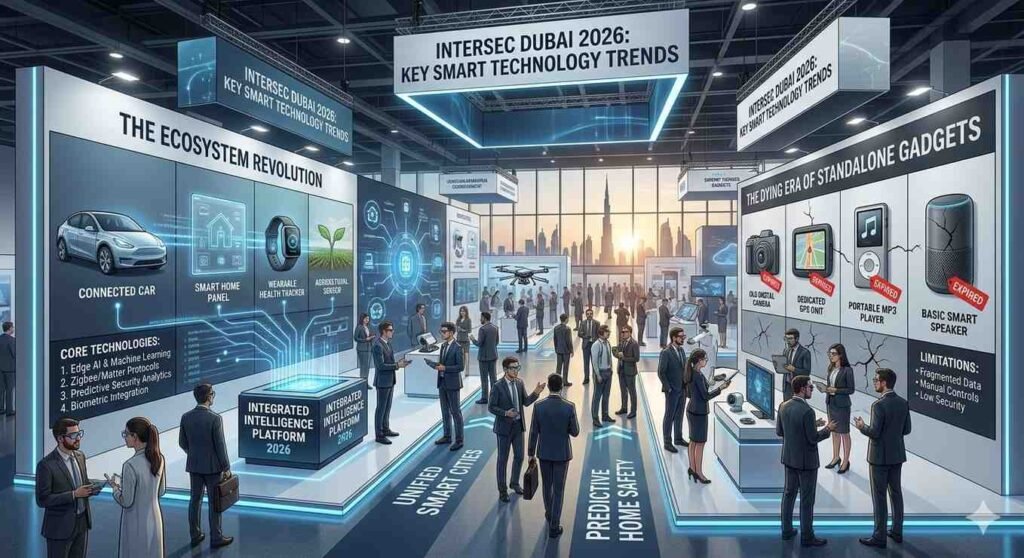
After Intersec Dubai, the global tech industry witnessed a clear shift toward integrated ecosystems.
Major highlights include:
- AI-powered surveillance systems with real-time analytics
- Smart city solutions combining traffic, security, and energy management
- Unified dashboards for enterprise security control
Furthermore, companies demonstrated how integration improves decision-making and reduces response time. As a result, industries such as security, healthcare, and retail are rapidly adopting these solutions.
Top Benefits of Integrated Intelligence Systems (With Examples)
Integrated Intelligence offers numerous advantages that standalone gadgets simply cannot match.
1. Seamless Automation and Smart Control
For example, a smart home system can automatically adjust lighting and temperature based on user behavior.
2. Enhanced Security and Real-Time Monitoring
AI-powered cameras detect threats and instantly alert connected devices.
3. Cost Efficiency and Reduced Complexity
Instead of maintaining multiple devices, users manage a single integrated system.
4. Data-Driven Decision Making
Businesses analyze real-time data to improve operations and customer experience.
5. Scalability and Future-Ready Technology
Integrated systems easily expand as new devices and technologies emerge.
Real-World Examples of Integrated Intelligence in Action
To better understand this shift, consider these real-life applications:
- Smart homes where devices sync for energy efficiency
- Retail stores using AI analytics for customer behavior tracking
- Smart cities integrating traffic, surveillance, and utilities
For instance, a smart city system can automatically adjust traffic signals based on congestion data, improving flow and reducing delays.
Challenges of Transitioning from Standalone to Integrated Systems
Although integrated intelligence is the future, the transition comes with challenges.
Some key issues include:
- High initial setup costs
- Data privacy and cybersecurity concerns
- Compatibility issues with older devices
However, as technology evolves, these challenges are gradually being addressed. Therefore, adoption is expected to increase rapidly in the coming years.
Future of Integrated Intelligence Beyond 2026
Looking ahead, integrated intelligence will become even more advanced.
Expected trends include:
- Fully autonomous smart environments
- AI systems predicting user needs before input
- Deeper integration across industries and platforms
As a result, standalone gadgets will continue to fade, replaced by intelligent ecosystems that prioritize efficiency and user experience.
Conclusion
Integrated Intelligence 2026 is transforming how we interact with technology. After Intersec Dubai, the shift toward connected ecosystems is undeniable. Standalone gadgets can no longer compete with the efficiency, automation, and intelligence of integrated systems. As industries and consumers embrace this change, technology will become more seamless, predictive, and user-focused. Ultimately, the future belongs to interconnected solutions that simplify life and enhance productivity.
FAQs
1. What is Integrated Intelligence 2026?
It is the integration of AI, IoT, and cloud technologies into a unified system that enables devices to communicate and work together.
2. Why are standalone gadgets becoming obsolete?
Because they lack connectivity, automation, and efficiency compared to integrated systems.
3. How did Intersec Dubai influence this trend?
It showcased advanced integrated solutions, accelerating global adoption of smart ecosystems.
4. Are integrated systems expensive?
Initially, yes, but they reduce long-term costs through efficiency and automation.
5. What industries benefit the most from integrated intelligence?
Security, healthcare, smart cities, retail, and home automation sectors benefit significantly.
Pingback: Coding Agents Are the New Engineers: How Autonomous Devs Are Transforming Software in April 2026 - AIVerse Hub
Pingback: Beyond Smartphones: Why 2026 is the Year of AI Wearable Displays - AIVerse Hub