
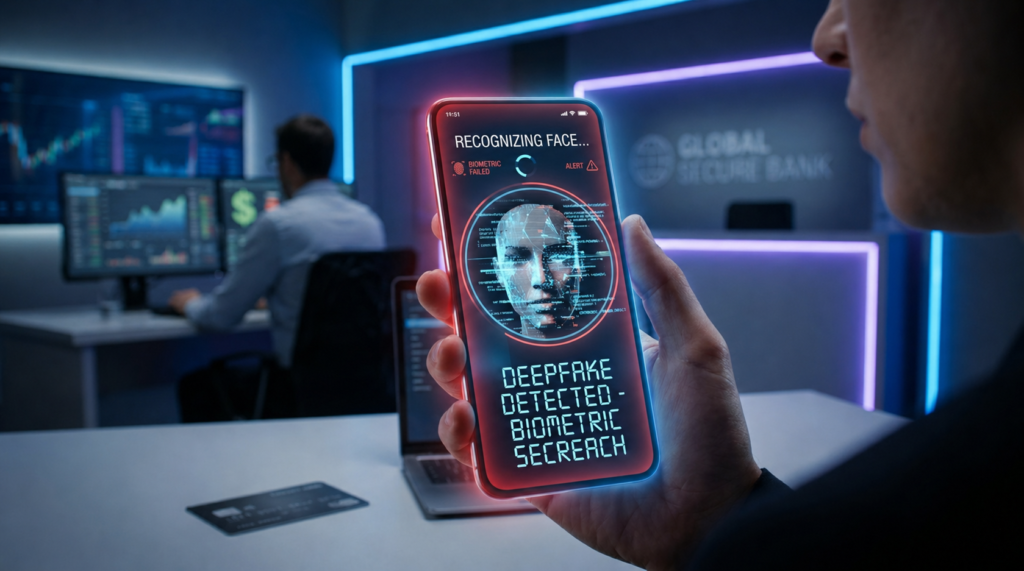
Introduction: Deepfake Banking and Biometric Security Risks in 2026
I recently tested multiple banking apps that rely heavily on biometric authentication like facial recognition and voice verification. At first, I felt completely secure because these systems promised advanced protection. However, after exploring how deepfake technology works in real-world scenarios, I realized how easily attackers can replicate identities. This personal experience opened my eyes to the rising threat of deepfake banking fraud and how it is silently bypassing biometric security systems.
Moreover, as AI tools continue to evolve, cybercriminals are becoming smarter and faster. They now use deepfake AI to mimic voices, faces, and even behavioral patterns. Consequently, traditional biometric security is no longer enough. In this article, I will explain how deepfake banking attacks work, why they are dangerous, and most importantly, how you can protect yourself in 2026.
What Is Deepfake Banking and How It Works in Modern Financial Systems?
Deepfake banking refers to the use of AI-generated fake identities to trick banking systems and bypass security layers.
- Attackers create realistic fake videos or audio using AI tools
- They mimic a user’s face, voice, or identity patterns
- These deepfakes are used to access bank accounts or authorize transactions
- AI learns from social media data, voice notes, or video clips
- The attack often appears completely authentic to systems
Example: A fraudster clones a person’s voice and calls the bank to reset account credentials.
Why Deepfake AI Threats Bypassing Biometric Security Systems Easily?
Biometric systems were once considered secure, but deepfake AI has exposed major weaknesses.
- Facial recognition systems can be fooled by AI-generated videos
- Voice authentication fails against cloned voice models
- Behavioral biometrics can be replicated with machine learning
- Systems lack real-time deepfake detection capabilities
- AI evolves faster than traditional security updates
As a result, deepfake attacks now bypass fingerprint, face ID, and voice ID systems.
Real-World Examples of Deepfake Banking Fraud Attacks in 2026
Deepfake banking is no longer theoretical—it is already happening globally.
- A CEO’s voice was cloned to authorize a $243,000 transfer
- Fraudsters used deepfake video to pass KYC verification
- AI-generated faces were used to open fake bank accounts
- Attackers bypassed video verification systems in fintech apps
- Social engineering combined with deepfake made attacks more convincing
These cases show how AI fraud is becoming more advanced and dangerous.
How Cybercriminals Use AI Deepfake Technology for Financial Fraud?
Cybercriminals follow a strategic approach when launching deepfake attacks.
- Collect data from social media, interviews, or recordings
- Train AI models to replicate voice and facial expressions
- Create realistic deepfake content in minutes
- Target banking apps or customer support systems
- Execute fraud through identity impersonation
Therefore, the combination of AI and social engineering increases success rates significantly.
Top Warning Signs of Deepfake Banking Attacks You Should Never Ignore
Recognizing early signs can help prevent financial loss.
- Slight delays or unnatural facial movements in video calls
- Voice tone sounds real but lacks emotional variation
- Urgent requests for money or sensitive information
- Unexpected biometric verification failures
- Suspicious login alerts from unknown devices
Always verify before taking action, even if everything looks real.
Best Ways to Protect Yourself from Deepfake Banking Fraud in 2026
You must take proactive steps to stay safe in this evolving threat landscape.
- Enable multi-factor authentication (MFA)
- Avoid sharing personal videos or voice recordings publicly
- Use banking apps with AI-based fraud detection
- Regularly monitor your bank transactions
- Set strong and unique passwords
- Verify unusual requests directly with your bank
Prevention is your strongest defense against AI-powered fraud.
How Banks Are Fighting Deepfake Threats with Advanced AI Security?
Banks are upgrading their systems to counter deepfake attacks.
- Implementing AI-based deepfake detection tools
- Using liveness detection in facial recognition
- Combining multiple authentication layers
- Monitoring behavioral patterns in real time
- Investing in cybersecurity and fraud detection systems
However, security is still a race between attackers and defenders.
Future of Banking Security: Can AI Beat Deepfake Technology?
The future of banking depends on stronger AI defenses.
- AI vs AI will define the next phase of cybersecurity
- Deep learning models will detect fake identities faster
- Blockchain may improve identity verification systems
- Governments may introduce stricter regulations
- Users will need more awareness and digital literacy
Ultimately, human awareness combined with AI security will shape safer banking.
Conclusion
Deepfake banking is rapidly becoming one of the most dangerous AI-driven threats in 2026. While biometric security once seemed reliable, it is now vulnerable to advanced AI manipulation. Therefore, both individuals and banks must adapt quickly. By understanding how deepfake attacks work and taking preventive measures, you can significantly reduce your risk. Staying informed, alert, and proactive is no longer optional—it is essential in today’s AI-powered financial world.
FAQs
1. What is deepfake banking fraud?
Deepfake banking fraud uses AI-generated voices, faces, or identities to access bank accounts and bypass security systems.
2. Can deepfake really bypass biometric authentication?
Yes, advanced deepfake AI can trick facial recognition and voice authentication systems.
3. How can I protect my bank account from AI fraud?
Use multi-factor authentication, avoid sharing personal data online, and monitor your transactions regularly.
4. Are banks prepared for deepfake threats?
Banks are improving security with AI detection tools, but the threat is still evolving rapidly.
5. Is deepfake banking common in 2026?
Yes, it is becoming increasingly common as AI tools become more accessible.
Pingback: Starlink Mini: How Digital Nomads Get High-Speed Internet Anywhere - AIVerse Hub