
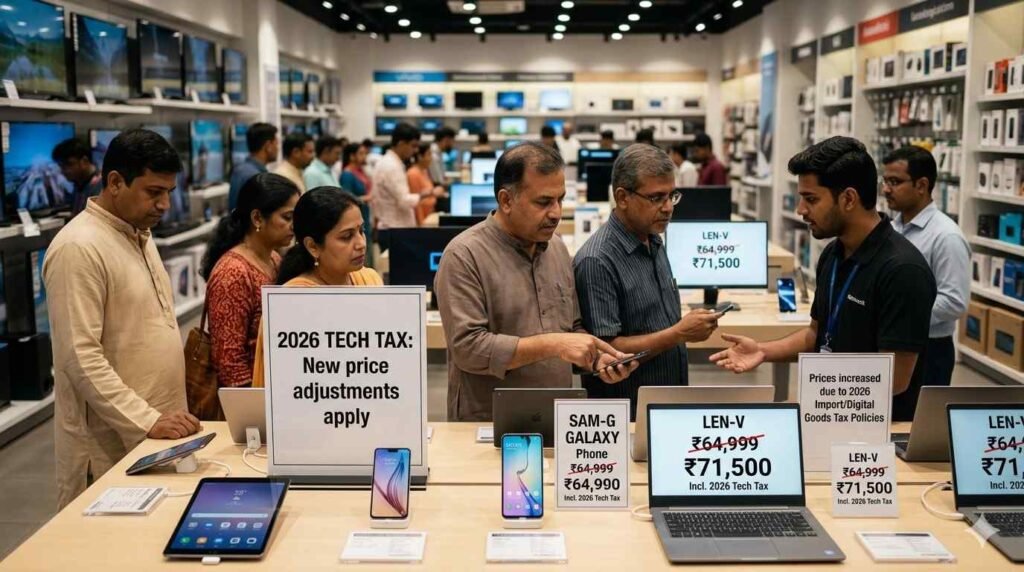
In 2026, I personally noticed a major shift in gadget prices while upgrading my smartphone and laptop. When I compared prices of brands like Apple and Samsung, the cost difference shocked me. Previously affordable devices suddenly became expensive due to new tax policies across South Asia. As a tech user, I experienced how import duties, digital taxes, and currency fluctuations directly impacted my buying decisions.
Moreover, the 2026 tax on tech is not just a headline, it is a real economic shift affecting millions. Countries like Pakistan, India, and Bangladesh have introduced new policies to regulate imports and boost local manufacturing. Consequently, gadget prices have surged, and consumers now think twice before upgrading. In this article, we will explore how these policies are changing the tech market in South Asia.
What Is the 2026 Tax on Tech and Why Governments Introduced It?
The 2026 tax on tech refers to a combination of new import duties, digital service taxes, and regulatory fees on electronic goods. Governments introduced these taxes to strengthen local industries and reduce reliance on imports.
Key Reasons Behind the Tax Policy
- Governments aim to promote local manufacturing industries
- Authorities want to reduce trade deficits
- Policies encourage foreign companies to build factories locally
- Tax systems increase government revenue streams
For example, companies like Xiaomi and Realme are now investing in local assembly plants to avoid heavy import duties.
How the 2026 Tax on Tech Is Increasing Gadget Prices?
The most noticeable impact of the 2026 tax on tech is the rising cost of gadgets. Consumers now pay significantly more for smartphones, laptops, and accessories.
Major Price Impact Factors
- Increased import duties on finished products
- Higher sales taxes and VAT rates
- Currency depreciation in South Asian economies
- Additional regulatory compliance costs
For instance, flagship smartphones from Apple and Samsung now cost 15–30% more compared to previous years.
Impact of Tech Taxes on Popular Gadget Categories in 2026
Different gadget categories are affected differently by these new policies.
1. Smartphones
- Prices of flagship phones increased drastically
- Mid-range devices are becoming less affordable
- Budget phones still survive but with fewer features
2. Laptops and PCs
- Imported laptops face heavy taxation
- Local assembly is slowly increasing
- Gaming laptops have become luxury items
3. Wearables and Accessories
- Smartwatches and earbuds face moderate tax increases
- Premium accessories are significantly more expensive
Brands like Dell and HP are adjusting pricing strategies to stay competitive.
Country-Wise Breakdown: South Asia Tech Tax Changes in 2026
Pakistan
- Increased import duties on smartphones and laptops
- Heavy taxes on luxury tech products
- Push for local manufacturing initiatives
India
- Strong focus on “Make in India” policy
- Incentives for local production
- Reduced reliance on imports
Bangladesh
- Tax benefits for local assembly plants
- Gradual increase in import tariffs
- Encouragement of domestic tech brands
These changes clearly show that governments want to reshape the tech ecosystem.
How Tech Companies Are Responding to New Tax Policies?
Tech giants are not sitting idle, they are adapting quickly to survive in the changing market.
Strategic Moves by Companies
- Setting up local manufacturing plants
- Partnering with regional suppliers
- Adjusting pricing and product strategies
- Launching region-specific budget models
For example, Samsung has expanded its manufacturing presence in India, while Xiaomi focuses heavily on local production.
Consumer Behavior Shift: How Buyers Are Reacting in 2026
Consumers are also changing their buying habits due to rising prices.
New Buying Trends
- People are holding onto devices longer
- Increased demand for refurbished gadgets
- Preference for mid-range smartphones
- Growing interest in local brands
As a result, the market is shifting from premium to value-driven purchases.
Future Outlook: Will Gadget Prices Continue to Rise?
Looking ahead, gadget prices may stabilize but not drop significantly.
Future Predictions
- Local manufacturing may reduce prices slightly
- Competition could balance the market
- Premium devices will remain expensive
- Budget segment will dominate sales
Therefore, the 2026 tax on tech is likely a long-term transformation rather than a temporary change.
Conclusion
The 2026 tax on tech has fundamentally reshaped the gadget market in South Asia. As governments push for economic growth and local production, consumers face higher prices and fewer affordable options. However, this shift also creates opportunities for regional manufacturing and innovation. While premium devices become harder to access, budget and mid-range markets continue to grow. Ultimately, both consumers and companies must adapt to this evolving landscape, where policy decisions directly influence technology accessibility and affordability.
FAQs
1. Why are gadget prices increasing in South Asia in 2026?
Gadget prices are rising due to higher import duties, new tax policies, and currency fluctuations.
2. Which countries are most affected by the 2026 tech tax?
Countries like Pakistan, India, and Bangladesh are significantly impacted.
3. Are budget smartphones still affordable in 2026?
Yes, but manufacturers are cutting features to maintain lower prices.
4. Will gadget prices decrease in the future?
Prices may stabilize, but major reductions are unlikely.
5. How can consumers save money on gadgets?
Consumers can buy refurbished devices, wait for discounts, or choose mid-range options.