
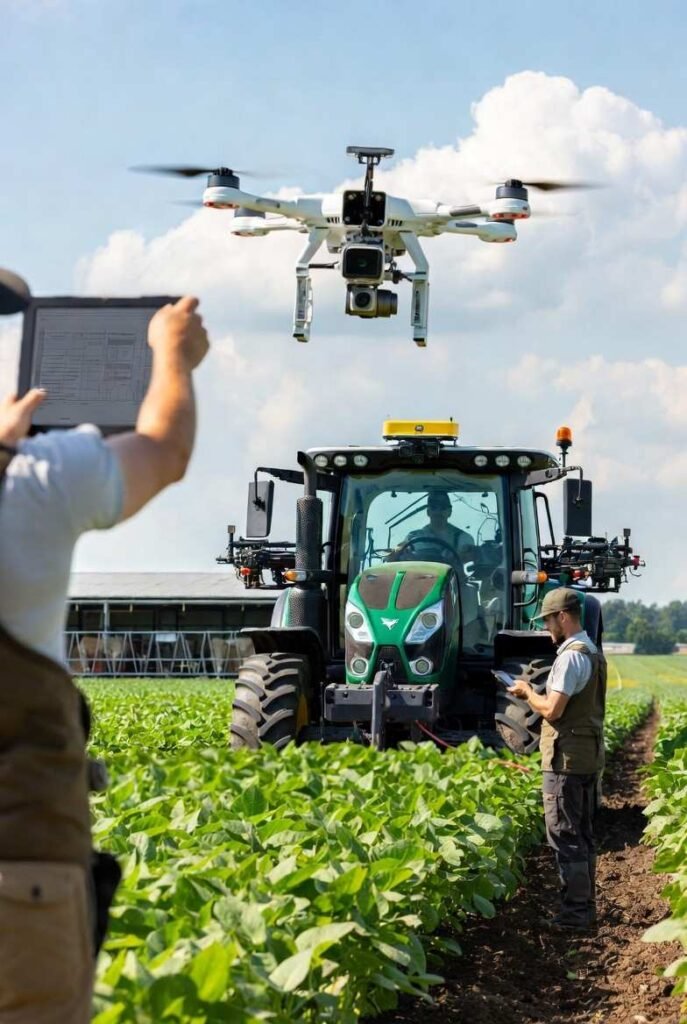
Agriculture technology is the use of modern tools and digital systems to improve farming and food production. It includes modern farming methods, smart machines, and data-based solutions. These innovations help farmers grow more food with less effort. Technology in agriculture is changing how crops and livestock are managed. Tools like precision agriculture and automation make daily farm work easier. They also support better planning and smarter decisions on farms. I believe agricultural innovation is important for the future of food systems. With smart farming solutions and digital tools, farming becomes more efficient and sustainable. This approach helps meet the needs of a growing population.
Importance of Technology in Modern Agriculture
Technology in agriculture plays a key role in improving how food is grown and managed. Modern tools help farmers save time and reduce manual work. This leads to better productivity and smoother farm operations. The use of modern farming technology supports higher crop yields and better-quality produce. Smart machines and digital systems help monitor crops closely. This reduces losses caused by pests and weather changes. Precision agriculture allows farmers to use water, seeds, and fertilizers more efficiently. Data-based decisions improve soil health and crop growth. This approach supports long-term farm sustainability. With smart farming solutions, farming becomes more reliable and cost-effective. Automated systems help manage irrigation and fertilization. This reduces waste and improves overall farm efficiency.
Role of Technology in Modernizing Agricultural Practices
Modern agricultural practices are changing with the help of advanced digital tools. Technology replaces many traditional farming methods. This shift improves speed, accuracy, and overall farm performance. The use of precision farming techniques helps farmers manage fields more effectively. Data from soil and weather sensors guide daily decisions. This leads to healthier crops and better yields. Automation in agriculture reduces the need for heavy manual labor. Machines now handle planting, watering, and harvesting tasks. This saves time and lowers physical workload on farms. With smart farming technology, farm operations become more organized and efficient. Real-time monitoring systems track crop and livestock conditions. This allows quick action when problems appear. Digital farming solutions support better resource management. Water, fertilizers, and energy are used only where needed.
Uses of Modern Technology in the Agriculture Sector
Modern agricultural technology is widely used to improve daily farming activities. Advanced tools help farmers plan and manage their work better. This leads to higher efficiency across farm operations. The use of smart farming equipment supports accurate planting and harvesting. Machines reduce errors and save valuable time. This improves overall productivity on farms. Digital agriculture tools help monitor soil health and crop growth. Real-time data allows quick responses to farm issues. This supports healthy and consistent crop development. With precision agriculture systems, resources are used in a controlled way. Water, seeds, and fertilizers are applied only where needed. This reduces waste and lowers farming costs. Automation in farming helps manage large-scale agricultural tasks.
Precision Agriculture and Data-Driven Farming
Precision agriculture focuses on using data to manage farms more accurately. Digital tools collect information about soil and crops. This helps improve planning and field performance. With data-driven farming, farmers make decisions based on real-time insights. Weather and soil data guide daily activities. This reduces guesswork and increases efficiency. Smart farming systems use GPS and mapping technology for field management. Crops receive the right care at the right time. This supports healthy and balanced growth. The use of agricultural data analytics improves yield prediction and risk control. Digital farming technology helps reduce costs and resource waste. Precision farming techniques also improve soil health management. Nutrient levels are monitored continuously. This keeps farmland productive for long-term use. Data-driven agriculture transforms traditional farming methods. This approach strengthens modern agricultural systems.
Internet of Things (IoT) in Agriculture
The Internet of Things in agriculture connects farm devices through smart networks. Sensors and machines share data automatically. This improves control over farming operations. IoT-based farming systems help monitor soil moisture and temperature. Real-time data supports better irrigation planning. This reduces water waste and improves crop health. With smart sensors in agriculture, farmers track crop growth accurately. These sensors detect changes in field conditions. Quick action can prevent crop damage. Connected agriculture technology supports efficient livestock monitoring. Wearable devices track animal health and movement. This improves animal care and productivity. The use of digital farming networks improves farm management decisions. Data from different tools is combined in one system. This creates better visibility across the farm.
Drones and Aerial Technology in Farming
Drones in agriculture are widely used for monitoring crops and farmland. They capture aerial images of large fields quickly. This helps identify problem areas early. With aerial crop monitoring, farmers can track plant health and growth stages. Drones provide clear and detailed field data. This supports timely farming decisions. Agricultural drone technology helps detect pests and diseases accurately. Early detection reduces crop loss. This improves overall farm productivity. The use of precision drone farming supports efficient spraying of fertilizers and pesticides. This helps plan better planting strategies. Smart farming drones also support livestock monitoring in large areas. Animals can be tracked without physical movement. This saves time and labor on farms. Aerial technology in agriculture improves efficiency and accuracy. Drones provide valuable insights for farm management. This strengthens modern farming systems.
Agricultural Robotics and Farm Automation
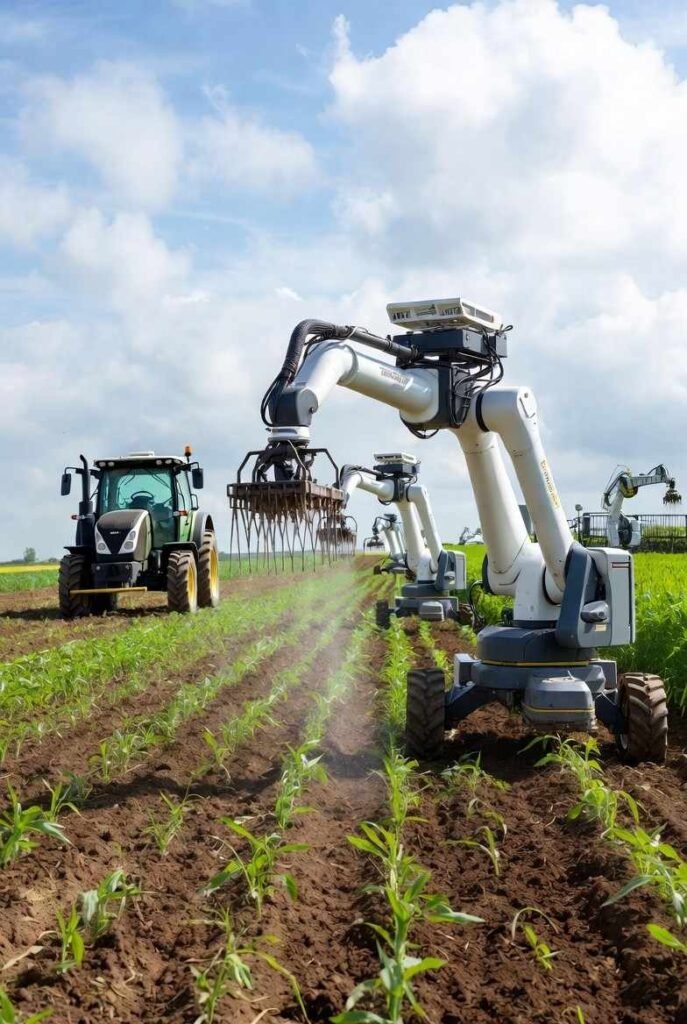
Agricultural robotics is transforming how farm work is completed. Robots perform tasks with speed and accuracy. This reduces dependence on manual labor. The use of farm automation technology improves planting and harvesting processes. Machines operate with minimal human effort. This increases consistency in farm output. Robotic farming systems help manage repetitive agricultural tasks. Activities like weeding and spraying become more efficient. This saves time and operational costs. With automation in agriculture, farms can operate around the clock. Automated machines work in different conditions. This boosts overall productivity levels. Smart agricultural robots support precise crop management. Sensors guide robots to act accurately in fields.
The Future of Artificial Intelligence in Agriculture
Artificial intelligence in agriculture is shaping the future of modern farming. AI systems analyze large amounts of farm data. This supports faster and smarter decision-making. The growth of AI-powered farming solutions improves crop planning and yield forecasting. Algorithms predict weather and soil conditions. This reduces risks and production losses. With machine learning in agriculture, farming systems become more accurate over time. Models learn from past data and results. Predictive agriculture technology helps detect pests and diseases early. AI tools identify patterns before damage spreads. The use of smart AI agriculture tools reduces manual workload on farms. Automated systems handle monitoring and alerts. This saves time and labor costs. The future of AI in agriculture promises higher productivity and resilience. Intelligent systems support long-term farm growth. This drives innovation in global agriculture.
Conclusion
Agriculture technology plays a vital role in shaping modern farming systems. Advanced tools like precision agriculture, automation, and artificial intelligence in agriculture improve productivity and efficiency. The use of smart farming solutions supports sustainable resource management and food security. Technologies such as IoT in agriculture, robotics, and controlled environments reduce risks and environmental impact. The importance of agricultural technology continues to grow, ensuring resilient farming practices and a stable global food supply for the future.
FAQ’s
Q1: What is agricultural technology?
Agriculture technology refers to modern tools and digital systems that improve farming and food production. It includes precision agriculture, automation, and smart farming solutions.
Q2: Why is technology important in agriculture?
Technology in agriculture increases efficiency, reduces manual labor, and improves crop yields. It helps farmers manage resources sustainably and plan better.
Q3: How does precision agriculture work?
Precision agriculture uses data from soil, weather, and crops to make informed farming decisions. This improves productivity and reduces waste.
Q4: What is the role of IoT in farming?
IoT in agriculture connects sensors and devices to monitor crops and livestock. Real-time data helps improve irrigation, fertilization, and farm management.
Q5: How do drones and robotics help farmers?
Drones in agriculture monitor crops and livestock from the air, while agricultural robotics automate tasks like planting and harvesting. Both save time and increase efficiency.
Q6: What are controlled environment agriculture and smart greenhouses?
Controlled environment agriculture and smart greenhouses regulate temperature, light, and humidity for year-round crop growth, improving yield and quality.