
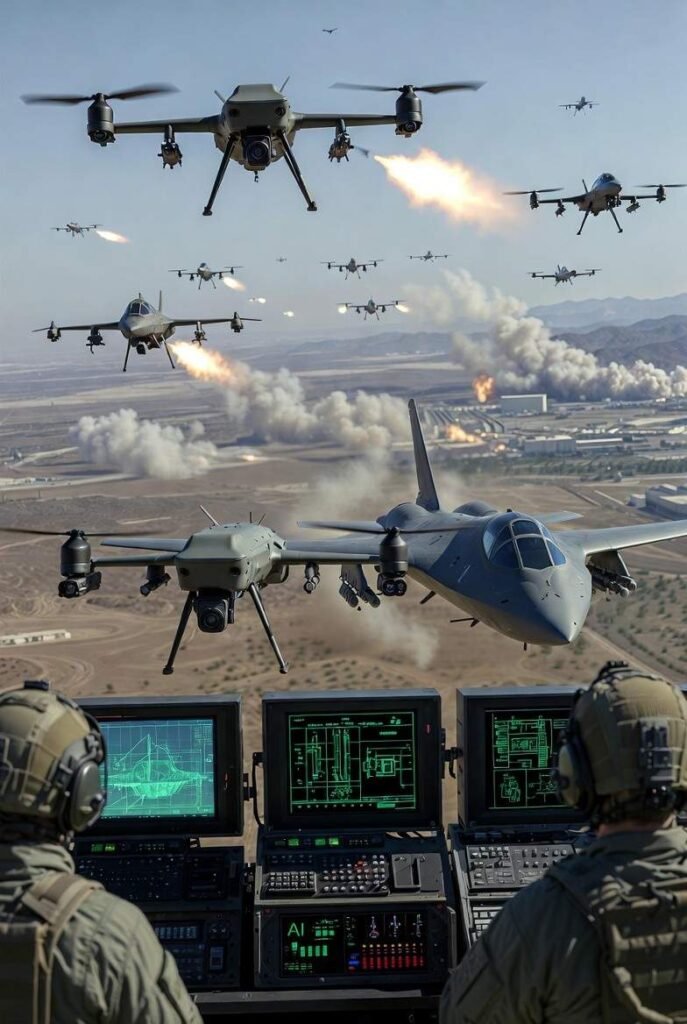
In late February 2026, an unprecedented military confrontation erupted between Iran and the United States, alongside Israel, after joint airstrikes targeted Iranian military and nuclear infrastructures. The strikes reportedly killed Iran’s Supreme Leader, Ayatollah Ali Khamenei, triggering a brutal tit-for-tat war across the Middle East. Missile salvos, drone swarms, fighter jets, warships, and cyber-enabled weapons have turned cities into war zones. The global oil supply chain and regional stability hang in the balance.
The Iran America war 2026 represents a new era of conflict where technology plays a decisive role on the battlefield. As battles intensify across the Middle East, diplomatic channels remain strained, global powers urge restraint, and fears of long-term instability continue to grow. The reported death of Ayatollah Ali Khamenei has further deepened uncertainty, making de-escalation increasingly difficult.
What Really Happened – US-Iran Escalation (2026)
- On 28 February 2026, the U.S. and Israel launched massive air and missile strikes on key Iranian military and nuclear facilities in Tehran and beyond.
- Iran launched retaliatory ballistic missile and drone attacks at U.S. bases and allies across the Gulf, including targets in Bahrain, Kuwait, Qatar, Saudi Arabia, UAE, and more.
- The conflict widened when Iranian-backed groups like Hezbollah missile-struck Israel, prompting counterstrikes in Lebanon.
- The Strait of Hormuz crisis disrupted global oil traffic, halting ~70% of tanker shipments and spiking crude-oil prices.
AI Technology in Modern Warfare
Modern combat systems in this Iran–USA war are driven by AI, automation, and next-gen computing, including:
AI-Enabled Drones and Unmanned Systems
- Autonomous and semiautonomous drones carry out surveillance, strike patterns, and real-time target adjustments.
- AI algorithms optimize flight patterns, evade air defenses, and support coordinated swarm attacks.
Smart Missile Guidance Systems
- Cruise missiles equipped with machine learning navigation adapt mid-flight to avoid countermeasures.
- AI helps integrate satellite data, radar feeds, and sensor networks for precision targeting.
Cyber Warfare & Electronic Interference
- AI powers electronic warfare suites that jam GPS, intercept enemy comms, and disrupt missile guidance.
- Defensive AI counters hostile drones, malware attacks, and battlefield networks.
Real-Time Battlefield Intelligence
- Machine-learning processing of satellite imagery and sensor inputs enables rapid decisions.
- AI supports target classification, predictive analytics, and resource allocation.
Weapons & Equipment in Use
Here’s a snapshot of modern military tech deployed in the conflict:
Aircraft & Strike Platforms
- F-35 and F-22 stealth fighters: advanced air superiority and precision strike platforms.
- Long-range bombers & tactical fighters delivering stand-off missiles.
Naval Assets
- Carrier strike groups with guided-missile destroyers providing Tomahawk and anti-air warfare.
- Submarines, surface vessels enforcing blockades or launching missiles.
Missile Systems
- Ballistic missiles and hypersonic glide vehicles.
- Surface-to-surface and surface-to-air missile arrays with AI guidance systems.
Air Defense & Countermeasures
- THAAD and Patriot missile defense for intercepting incoming threats.
- AI-assisted radar and sensor fusion to detect and track hostile objects.
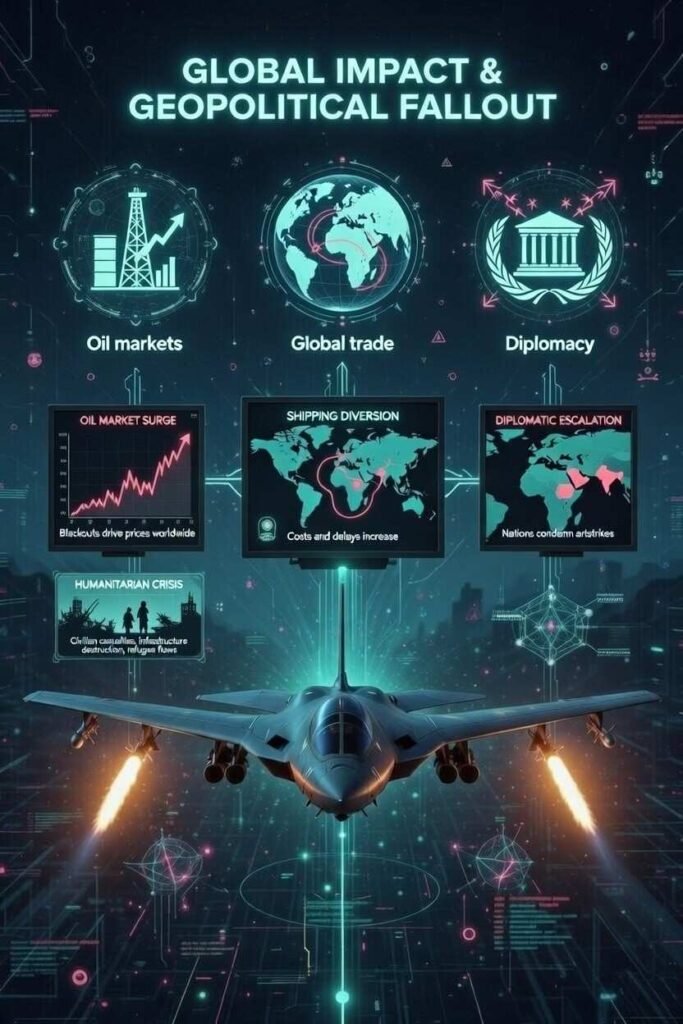
Global Impact & Geopolitical Fallout
This Iran America war 2026 is not just a regional confrontation – it’s affecting:
- Oil markets: Blackouts in energy supply drive up prices worldwide.
- Global trade: Shipping rerouted around Africa increases costs and delays.
- Diplomacy: Middle Eastern nations like Saudi Arabia and GCC states condemn airstrikes and escalate tensions.
- Humanitarian costs: Civilian casualties, infrastructure destruction, and refugee flows emerging across borders.
- Defense spending surge: Countries worldwide are accelerating military modernization and AI-based defense investments.
- Stock market volatility: Global financial markets are experiencing sharp swings amid geopolitical uncertainty.
- Nuclear proliferation concerns: Rising tensions are renewing fears about nuclear escalation and regional arms races.
- Human rights pressure: International organizations are demanding ceasefires amid reports of civilian harm and humanitarian crises.
- Cybersecurity risks: State-sponsored cyberattacks targeting banks, power grids, and communication networks are on the rise globally.
Conclusion
The Iran America war 2026 is a dramatic escalation of decades-long tensions, marked by unprecedented use of AI-enhanced warfare, drones, smart missiles, cyber warfare, and autonomous systems. This conflict has not only reshaped the Middle East battlefield but also disrupted global energy supplies, international diplomacy, and regional power balances. As both sides continue exchanges of strikes and counter-strikes, the risk of wider conflict involving proxy forces and global trade shocks remains high. The world watches, uncertain if diplomacy can end this devastating war.
FAQs
1. What triggered the 2026 war between Iran and the United States?
The conflict escalated after coordinated military strikes on Iranian strategic facilities, followed by large-scale retaliation across the Middle East.
2. How is artificial intelligence being used in this war?
AI is powering drone swarms, missile guidance systems, battlefield surveillance, cyber warfare tools, and real-time military decision-making.
3. What types of drones are used in the Iran–USA conflict?
Both sides are deploying autonomous attack drones, reconnaissance UAVs, loitering munitions, and AI-enabled surveillance drones.
4. Is cyber warfare a major part of the 2026 conflict?
Yes, cyberattacks targeting energy grids, military networks, satellites, and communication systems play a critical role in modern warfare.
5. How does this war affect global oil prices?
Disruptions in key shipping routes and energy infrastructure have caused oil supply shortages and sharp increases in global fuel prices.
6. Are other Middle Eastern countries involved in this conflict?
Yes, not directly fighting, several regional nations are affected through security threats, diplomatic pressure, and economic instability.
7. What advanced weapons systems are being used in the war?
The conflict includes stealth fighter jets, smart missiles, AI-assisted air defense systems, electronic warfare tools, and naval strike platforms.
8. How does AI change traditional warfare strategies?
AI increases speed, accuracy, automation, and predictive capabilities, reducing human response time and reshaping battlefield tactics.
9. What are the humanitarian consequences of this war?
Civilian casualties, damaged infrastructure, medical shortages, and cross-border refugee movements are increasing rapidly.
10. Could the Iran–USA war escalate into a global conflict?
Yes, experts warn that prolonged escalation could draw in global powers, disrupt trade, and intensify geopolitical instability worldwide.