
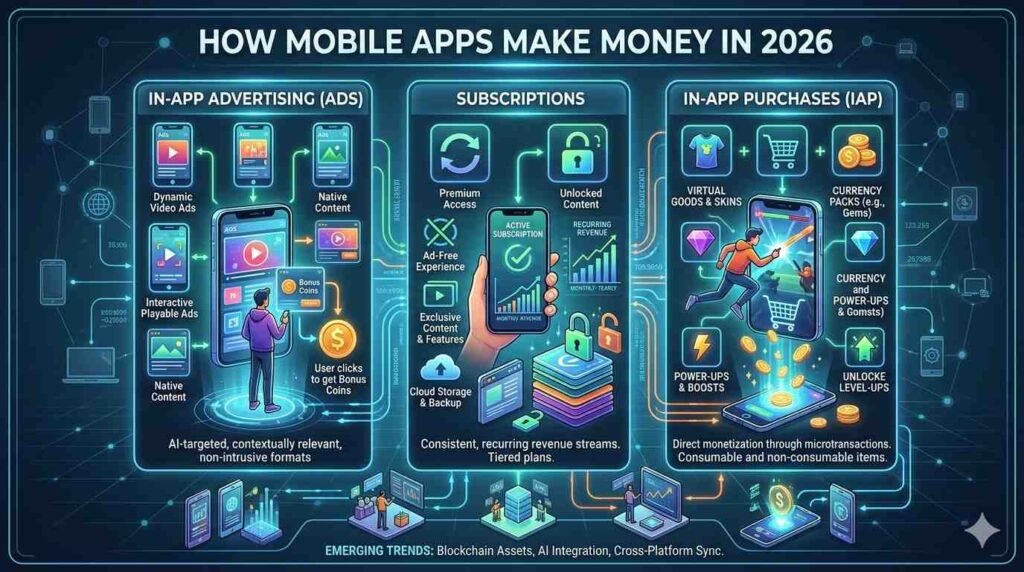
In 2026, I personally use many mobile apps daily, from fitness trackers to productivity tools, and I’ve noticed how smoothly they monetize without disturbing the user experience. While using these apps, I realized that most of them follow smart revenue strategies like ads, subscriptions, and in-app purchases. These models are not only effective but also user-friendly when implemented correctly. As a content creator and tech enthusiast, I’ve explored several apps and even tested premium features to understand how they generate income.
Moreover, mobile app monetization in 2026 has become more advanced and personalized. Developers now focus on user behavior, preferences, and engagement to maximize revenue. Whether it’s a free app showing ads or a premium app offering subscriptions, each method plays a crucial role. In this guide, you will clearly understand how mobile apps make money in 2026 using ads, subscriptions, and in-app purchases, along with real-world examples and strategies.
What Is Mobile App Monetization in 2026?
Mobile app monetization refers to the strategies developers use to earn money from their apps. In 2026, these methods have evolved with AI-driven targeting, personalized offers, and better user engagement.
Key Monetization Methods:
- Ads-based revenue
- Subscription models
- In-app purchases (IAPs)
- Freemium strategies
- Affiliate marketing
Ads-Based Revenue Model in Mobile Apps
One of the most common ways mobile apps make money is through advertising. Developers earn revenue by displaying ads to users inside the app.
Types of Ads Used in 2026:
- Banner Ads – Small ads shown at the top or bottom
- Interstitial Ads – Full-screen ads between actions
- Rewarded Ads – Users watch ads to get rewards
- Native Ads – Ads that blend with app content
Examples of Apps Using Ads:
- Free gaming apps
- News and media apps
- Video streaming apps
Why Ads Work:
- Easy to implement
- Generates passive income
- Works well for free apps
However, developers must balance ads carefully, as too many ads can reduce user experience.
Subscription Model: Recurring Revenue Strategy
In 2026, subscription-based apps are growing rapidly because they provide consistent income and long-term users.
Types of Subscriptions:
- Monthly subscription
- Yearly subscription
- Freemium (free + premium upgrade)
Examples of Subscription Apps:
- Fitness apps (premium workout plans)
- Streaming apps (movies, music)
- Productivity tools (cloud storage, AI tools)
Benefits of Subscription Model:
- Predictable revenue
- Strong customer retention
- Higher lifetime value
Additionally, many apps offer free trials to attract users before converting them into paying customers.
In-App Purchases (IAPs): Microtransactions That Add Up
In-app purchases allow users to buy digital items, features, or upgrades within the app.
Types of In-App Purchases:
- Consumables (coins, tokens, lives)
- Non-consumables (premium features)
- Upgrades (ad-free version)
Examples of IAP Usage:
- Mobile games selling skins or coins
- Photo editing apps unlocking filters
- Learning apps offering premium lessons
Why IAPs Are Effective:
- Users pay only for what they need
- Increases engagement
- Boosts revenue without forcing payments
As a result, this model works especially well in gaming and freemium apps.
Freemium Model: Combining Free and Paid Features
The freemium model allows users to access basic features for free while charging for advanced features.
How It Works:
- Free version attracts users
- Premium version unlocks value
Examples:
- Free note-taking apps with paid cloud sync
- Basic video editors with premium export options
Advantages:
- Large user base
- Easy user acquisition
- Upselling opportunities
Affiliate Marketing and Partnerships in Apps
In 2026, many apps will also make money through affiliate marketing by promoting products or services.
How It Works:
- App recommends products
- User clicks and purchases
- App earns commission
Examples:
- Shopping apps
- Travel booking apps
- Review-based apps
AI-Powered Monetization Strategies in 2026
Modern apps now use AI to increase revenue efficiently.
Smart Monetization Techniques:
- Personalized ads
- Dynamic pricing
- User behavior tracking
- Predictive recommendations
Benefits:
- Higher conversions
- Better user experience
- Increased profits
Best Monetization Strategy: Which One Should You Choose?
Choosing the right monetization strategy depends on your app type and audience.
Recommendations:
- Gaming apps → In-app purchases + ads
- Productivity apps → Subscription model
- Content apps → Ads + affiliate marketing
- New apps → Freemium model
Conclusion
In conclusion, mobile apps will make money in 2026 through smart and user-focused strategies like ads, subscriptions, and in-app purchases. Each model offers unique benefits, and successful apps often combine multiple methods to maximize revenue. As technology evolves, developers rely more on AI and personalization to improve monetization. Whether you are a user or a developer, understanding these strategies helps you make better decisions. Ultimately, the key to success lies in balancing revenue generation with a seamless user experience.
FAQs
1. What is the best way for mobile apps to make money in 2026?
The best way depends on the app type, but subscriptions and in-app purchases are currently the most profitable.
2. Are ads still effective in mobile apps?
Yes, ads are still effective, especially rewarded and native ads, which improve user engagement.
3. What is a freemium app model?
A freemium model offers basic features for free and charges for advanced features.
4. Do all apps use in-app purchases?
No, but most gaming and freemium apps rely heavily on in-app purchases.
5. How do free apps earn money?
Free apps mainly earn through ads, affiliate marketing, and optional in-app purchases.